
White County Court Records After a Jail Arrest
After a White County arrest, the first record is usually a jail or arrest record created around booking at White County Jail. That record can show the arresting agency's charge, the warrant basis, booking time, and bond information when available. The court record is different. It follows the case after prosecutors, the Clerk of Court, Magistrate Court, or Superior Court receive filings and begin tracking the charge in a court case.
This distinction matters because a booking charge may not match the charge that is finally filed. A jail record might show a warrant charge or officer allegation, while the court file may later show an amended count, a reduced misdemeanor, a dismissed charge, or a felony accusation or indictment. Use jail inmate records for current custody and booking information. Use jail mugshots for booking-photo access. Use the court channels below for formal filed charges and case status.
The White County Clerk of Court page gives the main criminal-case contact point for court files.
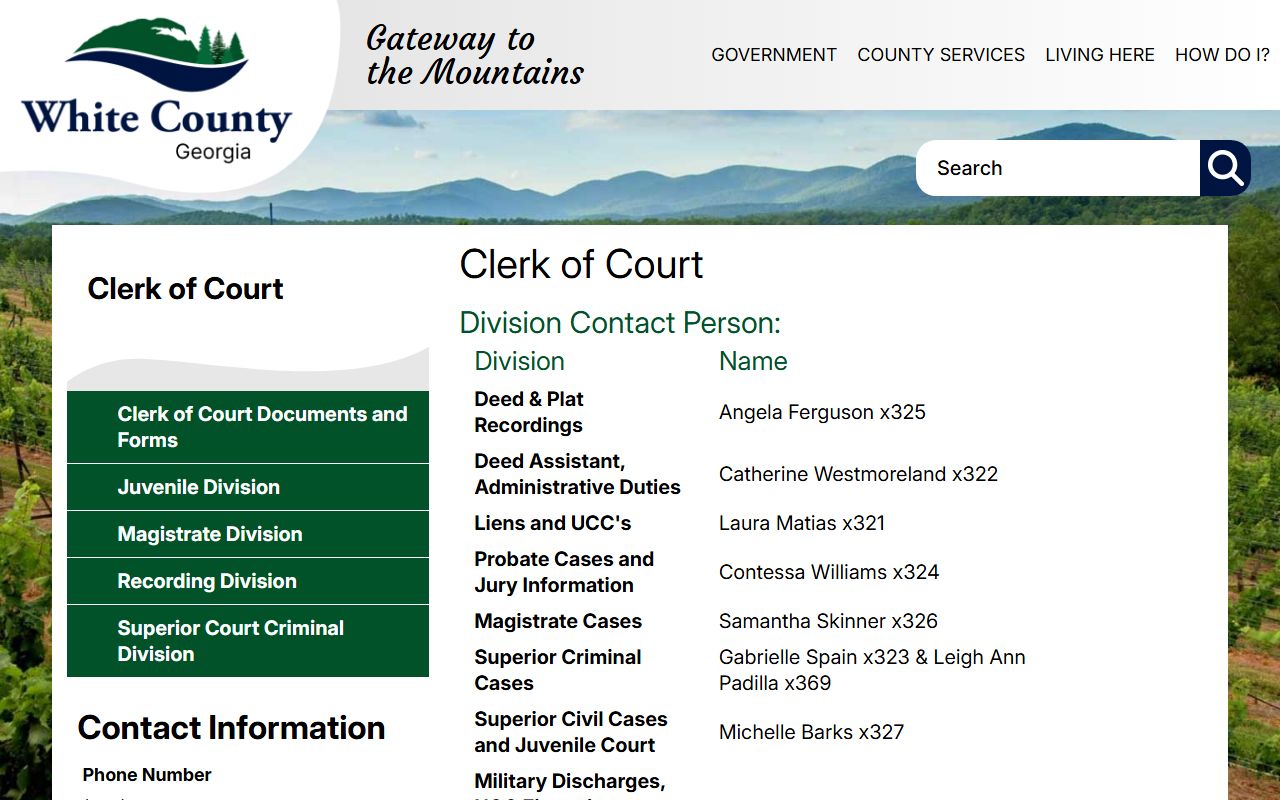
The clerk contact block is important because court records after an arrest are maintained through the courthouse, not the jail roster.
How to Find Court Records After an Arrest in White County
Start with the custody side if the arrest is recent. White County says to allow up to three hours for a newly arrested person to be properly booked and for bond information to become available. For most warrant arrestees without a pre-existing or ordered bond amount, first appearance hearings are held at 2:00 PM Monday through Friday.
- Call White County Jail at 706-865-5177 if the person was just arrested or if current custody status is the first question.
- For booking paperwork, use the sheriff's open-records form and request Arrest/Booking Report(s).
- For misdemeanor, warrant, probable-cause, or ordinance matters, contact Magistrate Court criminal division at 706-865-6636.
- For felony cases, contact the Clerk of Court at 706-865-2613 and ask for Superior Criminal Cases.
- For formal filed charges or open and pending reports, use the District Attorney channel at 706-865-3306 when the sheriff's records page routes the issue there.
- Check Georgia e-access and PeachCourt if an online court-document account is available for the case.
Georgia's e-access court records page lists White Superior through PeachCourt and explains that users are redirected to a provider site.
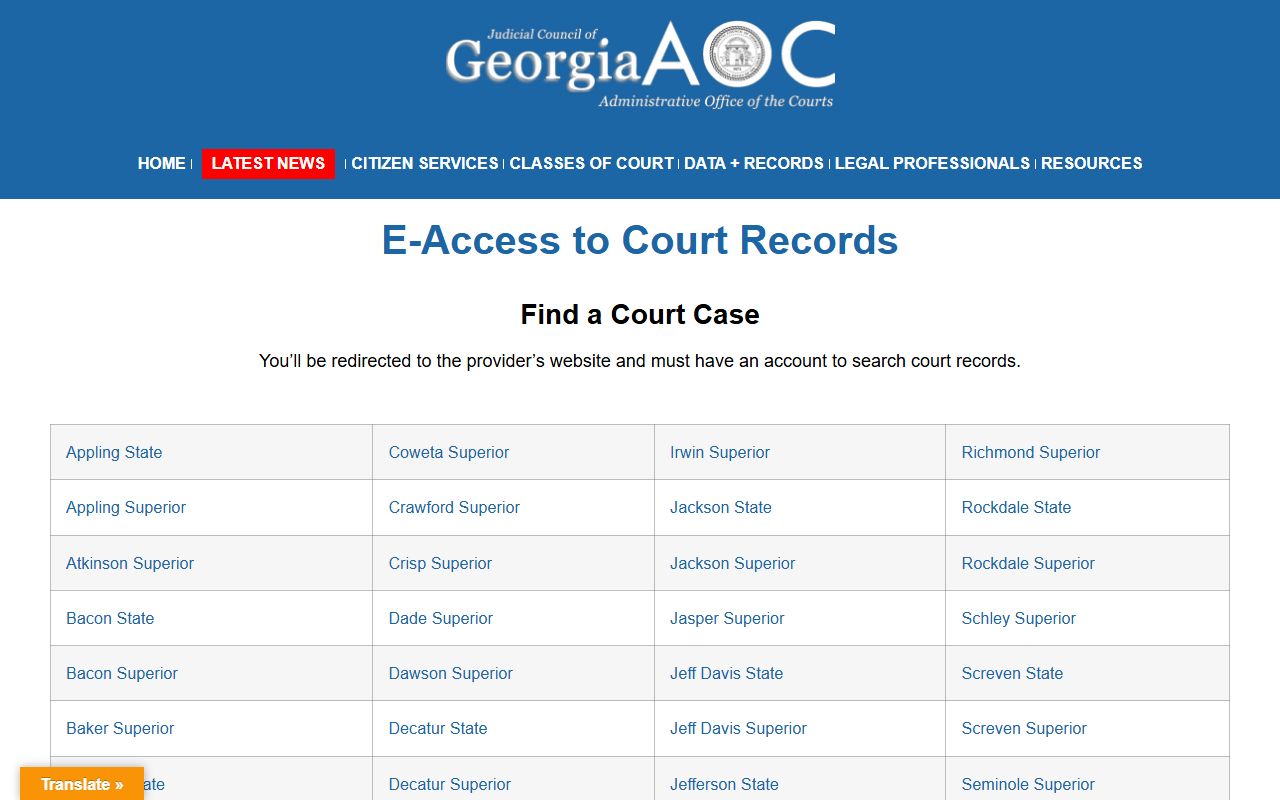
Because the e-access route is provider based, a person may need a PeachCourt account before seeing available documents.
Magistrate and Superior Court Records After Arrest
White County is part of the Enotah Judicial Circuit. Superior Court handles felony jury trials and major criminal matters. The circuit was formed by Lumpkin, Towns, Union, and White Counties, so felony prosecution and Superior Court case handling are not limited to a single isolated local office.
White County Superior Court describes the Enotah Judicial Circuit and the court's felony-trial role.
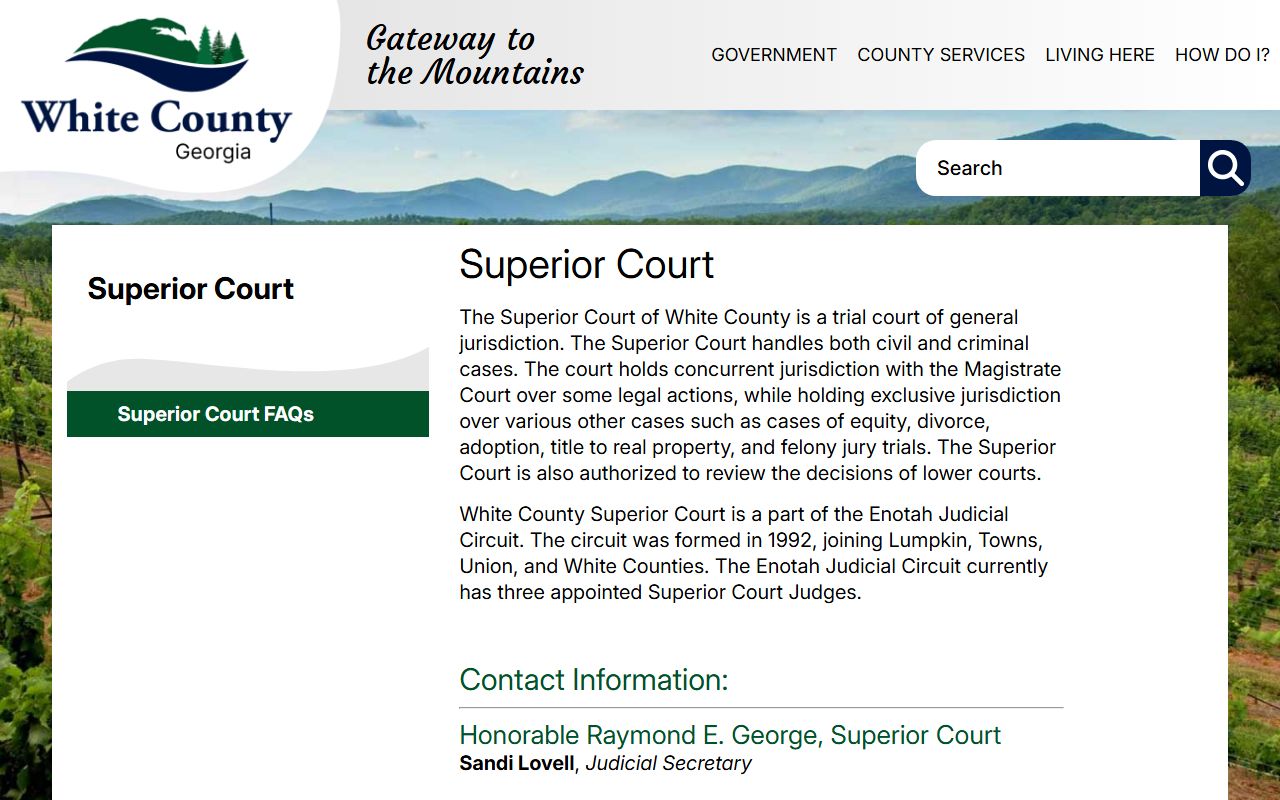
For a felony arrest, Superior Court and the Clerk of Court are the practical starting points once formal court records exist.
Magistrate Court is the local court channel for arrest, inspection, and search warrants. It also handles deposit account fraud, county ordinance violations, and misdemeanors listed by the court, including possession of less than 1 ounce of marijuana, shoplifting, refund fraud, under-21 alcohol possession, and criminal trespass. Magistrate Court criminal cases do not include juries.
The Magistrate Court page identifies the warrant and misdemeanor matters that often connect directly to jail arrests.
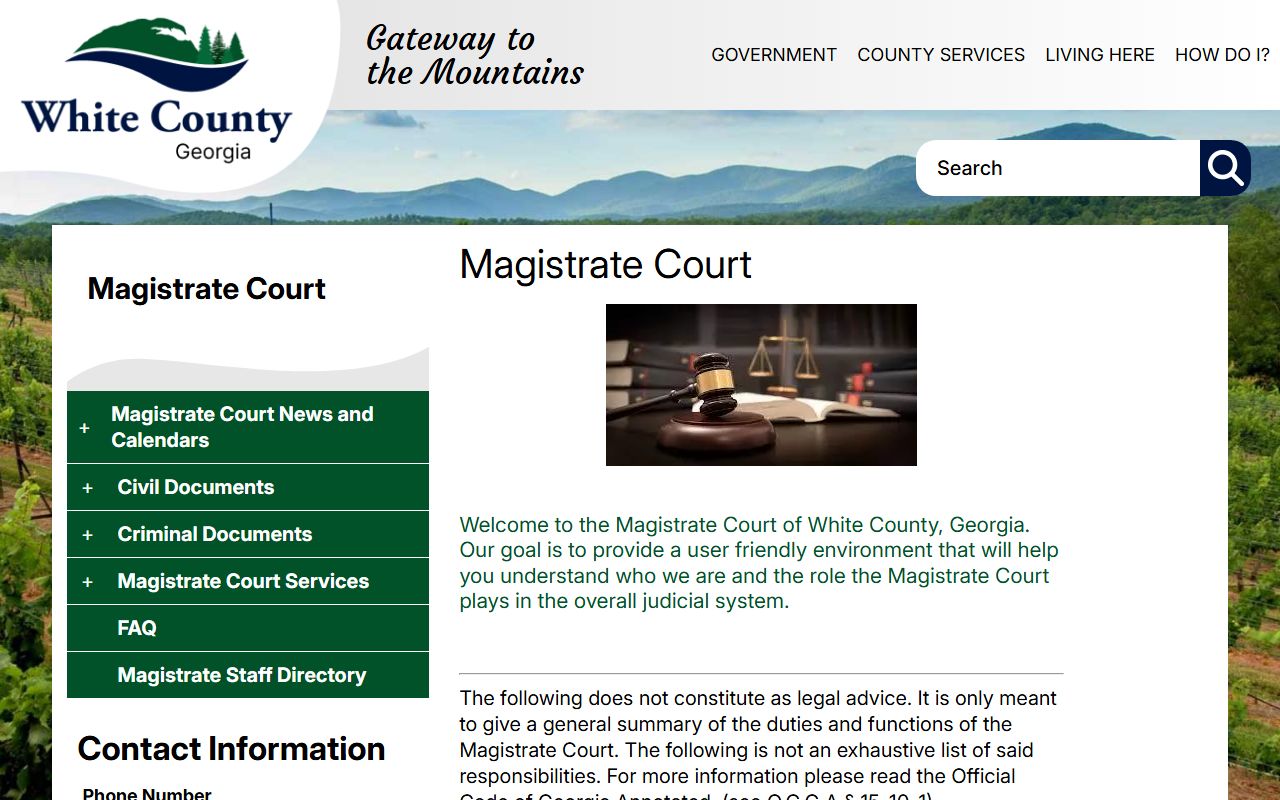
This court is especially relevant when an arrest starts with a warrant or when the case remains in a non-jury misdemeanor track.
How Charges Get Filed After an Arrest: Complaint, Accusation, and Indictment
The jail booking entry is not the final charging document. After arrest, the prosecutor and court process determine what charges are filed, amended, reduced, dismissed, or sent forward. In Georgia practice, a misdemeanor or lower-level matter may proceed through a complaint, citation, warrant, or accusation. Felony matters can proceed through formal prosecution in Superior Court, including indictment where the grand-jury route applies.
| Complaint or Warrant | Accusation | Indictment | |
|---|---|---|---|
| Filed By | Officer, complainant, or court process | Prosecutor | Grand jury |
| Common For | Warrants, probable-cause issues, misdemeanors | Many prosecuted criminal charges | Serious felony cases |
| Where to Check | Magistrate Court or Clerk | Clerk, DA, or PeachCourt if available | Superior Court and Clerk |
Charge Status in White County Court Records
Charges can change as a court case moves. A prosecutor may file a different charge than the jail booking record, dismiss a count, add a count, reduce a charge, or proceed on a felony track. The safest reading is to treat the jail charge as an early custody entry and the court record as the filed case history.
| Status | What It Means |
|---|---|
| Pending | The charge remains open and has not reached final disposition. |
| Amended / Reduced | The filed charge or level changed after review, plea negotiation, or court action. |
| Dismissed | The court record shows the charge was ended without a conviction on that count. |
| Nolle Prosequi | The prosecutor declined to continue prosecution on that count. |
District Attorney Role After a White County Arrest
White County's District Attorney is Jeff Langley. The office is listed at 59 S. Main Street, Box 14, Cleveland, GA 30528, with phone 706-865-3306 and office hours Monday through Friday, 8:30 AM to 5:00 PM. The Sheriff's Office open-records page specifically directs open or pending reports to the District Attorney, which is useful when the jail record does not answer whether a prosecutor has filed or changed charges.
White County's District Attorney page provides the local prosecution office contact block.
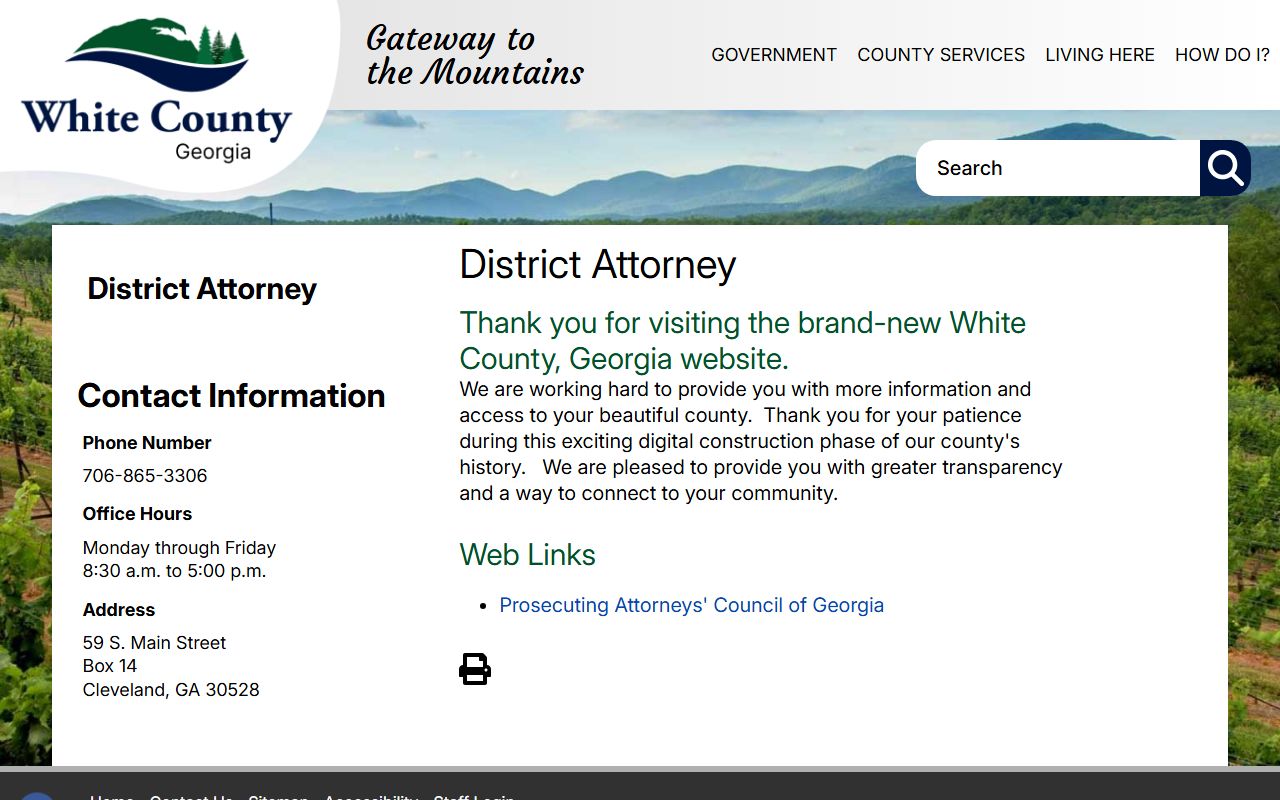
The DA office is the prosecution channel, while the Clerk and courts are the filing and case-record channels.
Bond, First Appearance, and Court Records After an Arrest
Bond information may not be available immediately after arrest. White County tells families to allow up to three hours for booking and bond information. A judge issues bonding conditions, and the jail recognizes release through approved bonding companies, cash bond, property bond, judge order, or sheriff order.
| Bond Type | How It Works |
|---|---|
| Cash Bond | Requires 100% of the bond plus White County's $20 cash bond fee, with exact change required. |
| Surety Bond | Posted through an approved bonding company. Jail staff cannot recommend a company under Georgia law. |
| Property Bond | Property must meet sheriff and county requirements, including ownership and value rules. |
| No-Bond Hold | Release is not available unless a judge changes the status or another legal hold is resolved. |
Warrants That Lead to Court Records After Arrest
No official searchable active-warrant list was located for White County. Warrant questions can route through the Sheriff's Office at 706-865-5177, Magistrate Court criminal division at 706-865-6636, or the Clerk of Court at 706-865-2613. Magistrate Court handles arrest, inspection, and search warrants, and an arrest on a warrant can lead to a 2:00 PM Monday through Friday first appearance when no pre-existing bond amount exists.
Charges vs. Convictions
An arrest charge is an accusation, not a conviction. The court record may show that a charge is pending, dismissed, reduced, amended, or resolved by plea or verdict. Background searches that blur this line can mislead readers because a booking charge may never become a conviction.
| Charge | Conviction | |
|---|---|---|
| Stage | Accusation or filed count | Verdict, plea, or adjudicated outcome |
| Proof | Probable cause or filed allegation | Proof beyond a reasonable doubt or guilty plea |
| Record Meaning | Shows what was alleged or filed | Shows final criminal responsibility for that count |
Restricted and Expunged Arrest Records in Georgia
Georgia generally uses the term record restriction for limiting public access to eligible criminal-history information. O.C.G.A. 35-3-37 is the key Georgia record-restriction law, and GCIC/GBI rules affect how criminal-history records are collected and released. A dismissed or eligible case may still require the correct record-restriction process before public access changes.
| Restricted | Expunged | |
|---|---|---|
| Visibility | Limited from public criminal-history access when approved | Common public term, but Georgia process is generally record restriction |
| Law Enforcement | May retain access under Georgia rules | Not the ordinary Georgia label for most modern arrest-record relief |
| Eligibility | Depends on disposition, timing, and GCIC process | Verify the specific court and Georgia.gov process before relying on the term |
Background Check Considerations
Georgia Open Records Act access, PeachCourt document access, and GCIC criminal-history access are different systems. O.C.G.A. 50-18-70 et seq. governs public-record access unless an exemption applies, and O.C.G.A. 50-18-71 allows record-production fees. GCIC/GBI criminal-history rules are separate from casual court lookup.
Important: This private site is not a consumer reporting agency and cannot be used for FCRA-covered screening decisions.
PeachCourt and White County Court Records After Arrest
PeachCourt provides account-based access for participating Georgia courts and describes coverage for civil and criminal eFiling and court documents.

If PeachCourt does not show the needed White County criminal record, use the Clerk of Court, Magistrate Court, Superior Court, or District Attorney contacts rather than assuming no case exists.